Dynamic Tread Adaptation
Most innovations focus on improving tread patterns to optimize grip and performance in various conditions. While smart tires that adjust pressure and monitor wear are in development, methos enabling complete dynamic adaptation remained to be explored.
ARWIMS has developed new architectural principles that make this innovation compatible with all types of tires (with or without air).
These principles ensure that the implementation of ARWIMS technology does not result in increased weight, loss of energy efficiency, or any imbalance in the wheel.
This breakthrough allows for the integration of adaptive tread and stud features without compromising the fundamental performance characteristics of traditional tires, offering a versatile solution for various driving conditions and vehicle types.
This represents a significant opportunity for advancement in tire technology, potentially revolutionizing vehicle performance and safety across diverse driving environments.
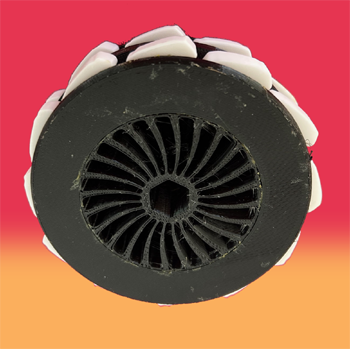
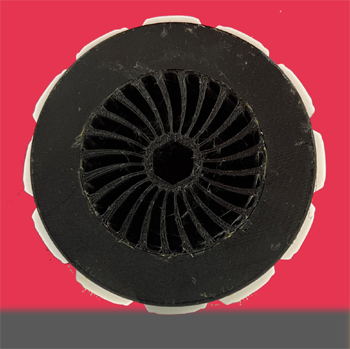
A first implementation method involves equipping the tire with tread blocks that automatically pivot within their housings inside the tread.

|
|
|
These blocks automatically deploy whenever possible, such as when the terrain is soft like snow or mud. |
But they align with the tread when the ground is hard, like on a road. |
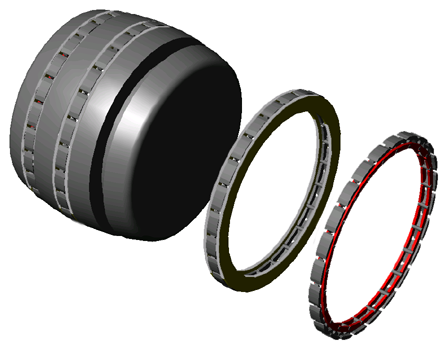
Manufacturing tires according to this first method may involve integrating rings with pivoting patterns into the tread by bonding.
|
|
The tread features annular grooves in which these rings can be inserted during construction.
Pivoting one block in the ring causes all the others to move in the same way as a rigid ring (here in red) automatically rotates when one block pivots. |
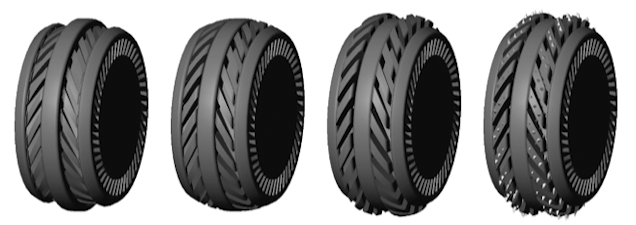
A second implementation method involves limiting the tread surface at low speeds, and increasing it or equipping it with retractable patterns and studs. The vehicle’s software determines the position of these elements according to driving conditions (terrain type and speed).
 |
Applications
All land vehicles are affected, and it is possible that ARWIMS smart wheels will become the industry standard.
Tire manufacturers will choose the technology to have the best offer, which will become essential because, when new tires are available, customers will no longer want to need to change tires according to the season and will demand to benefit from the advantages of the technology, including significant energy savings and a strong improvement in safety.
Benefits
- Safety: Real-time monitoring enables a permanent adaptation of the tire to the driving conditions, providing important grip in all circumstances.
- Energy efficiency: Real-time adaptation of the tread to the conditions encountered allows only a small part of its surface to be used when driving slowly or with a low load.
- Predictive maintenance: : Collected data allows for anticipating potential issues, thereby reducing maintenance costs and extending tire lifespan.
- Connectivity: Our smart tires can communicate with the vehicle's control system, optimizing route planning and maintenance.