The efficiency of retractable paddle tracks
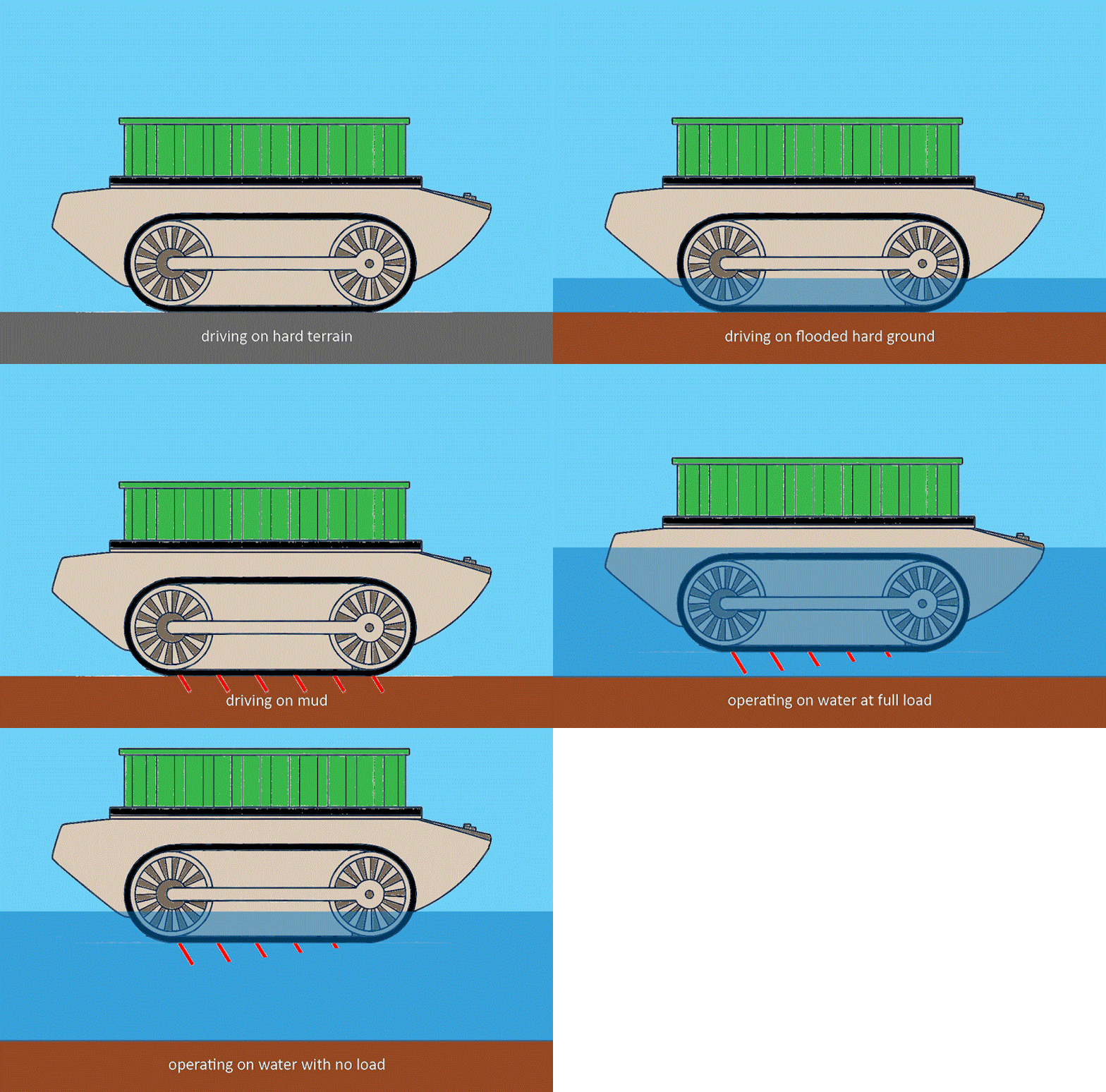
Retractable paddle tracks are preferred for traveling mostly on mud or water.
|
ARWIMS introduces a paradigm shift by utilizing retractable paddle tracks as the primary vector for both propulsion and hydrodynamic lift. Originally developed for extreme terrain (snow, mud, marshland), this paddle-track architecture has demonstrated a decisive advantage over conventional systems: the near-elimination of surface friction. While traditional propellers and hulls suffer from drag that increases exponentially with speed, the ARWIMS track system moves in synchrony with the water, drastically reducing relative fluid resistance. |
Engineered for Efficiency and Speed
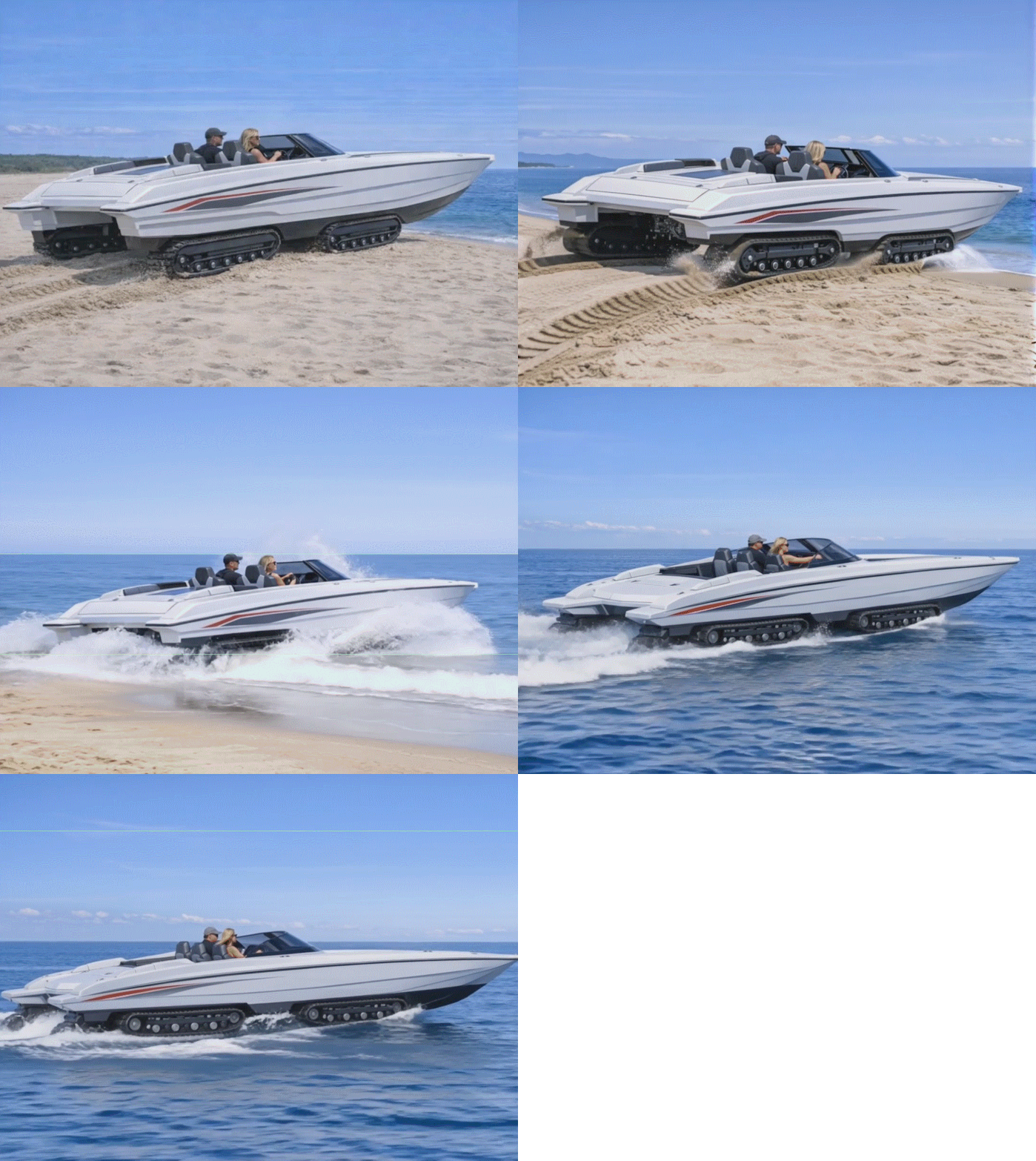
When reaching planing speeds, the tracks serve as the sole contact surface with the water. This mechanical synchronization yields transformative results:
Friction Cancellation: The moving contact surface eliminates the "drag wall" typical of static hulls.
Superior Power-to-Speed Ratio: Energy consumption is significantly lower than that of propeller-driven vessels at equivalent speeds.
Seamless Transition: High-speed maritime performance is matched by rapid transit capabilities on roads and soft soils.
The Future of Multi-Domain Mobility ARWIMS represents more than a propulsion upgrade; it is a new class of vehicle.
By integrating retractable paddles and advanced suspension systems, ARWIMS bridges the gap between naval architecture and terrestrial engineering.
This technology offers an unparalleled solution for logistics, rescue, and specialized transport in environments where traditional boundaries between land and sea disappear.
Secrets Revealed
Why it Works
The superiority of paddles when sailing at low speed
| ARWIMS paddles behave like a slow, linear, high-torque water pump: | |
| - | The paddles move almost at the same speed as the water |
| - | Slip is extremely low (~5%) |
| - | The water is pushed gently but firmly, without turbulence |
| - | The contact area is huge (full track length × width) |
| - | The flow is laminar and controlled |
| - | No cavitation, no ventilation, no tip vortices, no swirl, no recirculation |
Why the ARWIMS concept of retractable paddles changes everything
| ARWIMS paddles behave like a slow, linear, high-torque water pump: | |
| - | The core revolution of ARWIMS is simple to state and profound in consequences: |
| - | The paddles only deploy when they are already underwater. |
| - | They retract before they reach the surface. |
ARWIMS retractable paddle tracks are very special
| All track types are compatible: metallic link tracks, elastomer belts, or semi-metallic hybrids. | |
 |
They pivot elastically around an axis located in the plane of the tread, and the force of the water exerts no torque capable of contracting or extending them. The effort required to deploy or retract them is therefore extremely low. The joint is very light, and debris simply exits through the side faces. |
The ARWIMS simulator allows you to calculate the performances of your project (speed and economy)
Use our simulator to measure the speed and energy savings of your project: